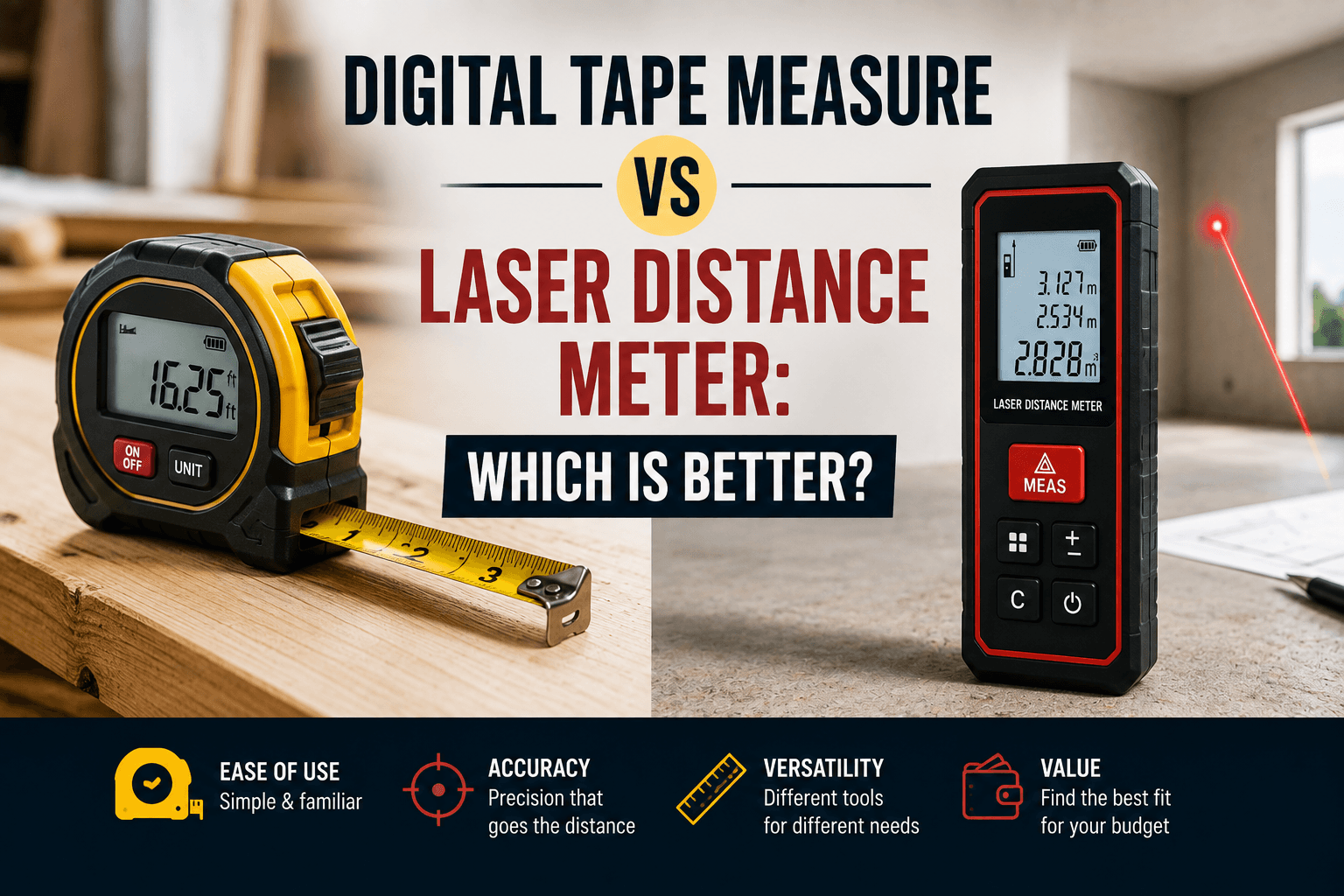
When I first looked closely at Digital Tape Measure vs Laser Distance Meter, I thought the laser tool would win almost every time. It is fast, neat, and does not need a long tape to stretch across a room. But real measuring work taught me something else: the “better” tool depends a lot on what I am measuring.
A digital tape measure and a laser distance meter solve the same basic problem in very different ways. One still uses a physical tape. The other uses a laser beam and electronics. Here is what I learned about where each tool works best, where each one can be annoying, and which one I would pick for different jobs.
Difference Between Digital Tape Measure and Laser Distance Meter
The biggest difference is simple. A digital tape measure physically reaches the object, while a laser distance meter calculates distance from the device to a target.
That small difference changes how each tool feels in daily use.
| Comparison Point | Digital Tape Measure | Laser Distance Meter |
|---|---|---|
| Measuring method | Physical tape | Laser beam |
| Best strength | Direct contact measuring | Fast long-distance measuring |
| Typical use | Small objects and general work | Rooms, walls and larger spaces |
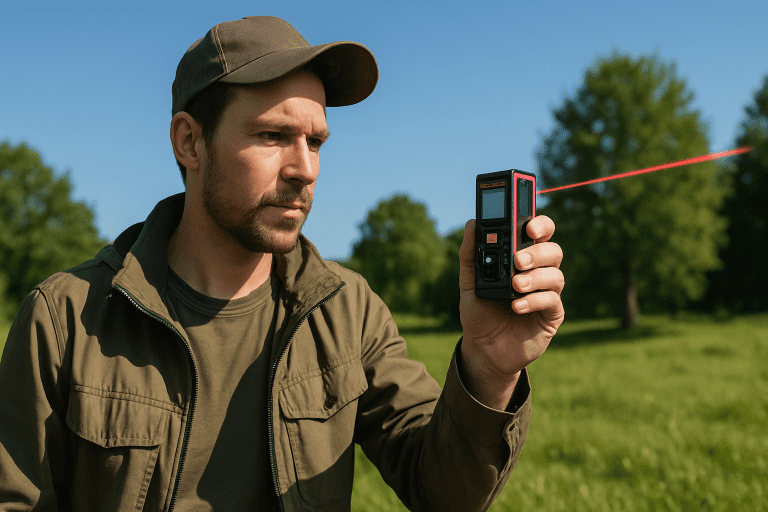
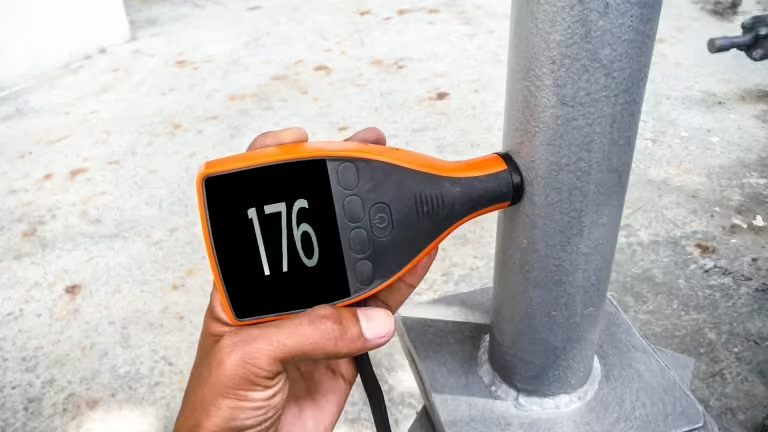
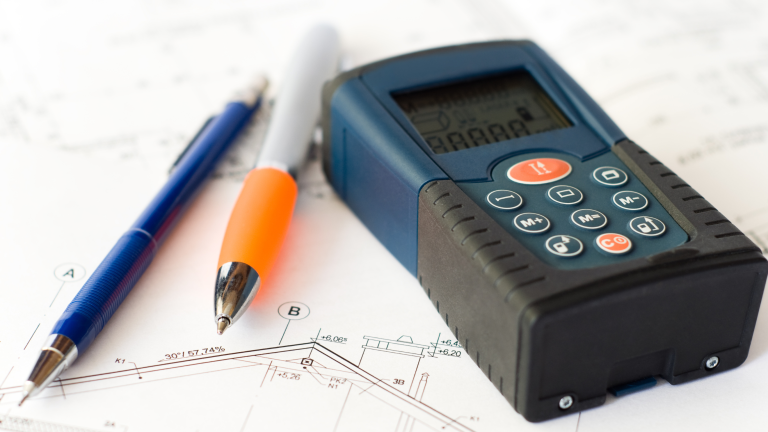
A digital tape measure usually looks like a normal tape measure but adds a digital display or electronic measuring features. A laser distance meter uses a laser to measure the distance to a surface.
I would not treat one as a complete replacement for the other. They are better viewed as two tools for different situations.
When a Digital Tape Measure Makes More Sense
A digital tape measure is handy when I need to touch the thing I am measuring. This matters more than it may seem.
For example, measuring the width of a box, the height of a piece of furniture, or the length of a small board is often easy with a physical tape. I can hook the tape, pull it out, and read the result.
It also works when a laser has trouble getting a clean reading.
| Situation | Better Choice | Why |
|---|---|---|
| Small object | Digital tape | Easy physical contact |
| Rough outdoor work | Digital tape | Less dependent on target surface |
| Measuring a curved item | Digital tape | Can follow the shape |
A Lesson I Learned About Small Measurements
One thing that is easy to overlook is targeting.
With a laser distance meter, I need to aim at a suitable surface. With a physical tape, I only need to reach the other end. For short measurements, that can actually be quicker.
A laser can feel like overkill when the measurement takes only a few seconds with a tape.
Why Laser Distance Meters Feel So Much Faster
The biggest advantage of a laser distance meter is speed.
If I need to measure a wall, I can stand at one end, aim at the opposite surface, and get the reading almost instantly. I do not need to walk across the room or hold a tape straight.
That becomes especially useful when measuring several rooms.
| Task | Digital Tape Measure | Laser Distance Meter |
|---|---|---|
| Measure a room length | More effort | Very quick |
| Measure a high wall | Awkward | Easier |
| Measure several rooms | Time-consuming | Much faster |
A laser distance meter can also calculate area and volume on many models. That saves another step when estimating flooring, paint, wallpaper, or room size.
Digital Tape Measure vs Laser Distance Meter for Accuracy
This is where I would be careful with simple claims like “laser is always more accurate.”
Accuracy depends on the tool, the measuring method, the target, and the conditions.
A good laser distance meter can provide very precise readings, but I still need to aim it correctly. A poor target, strong light, or an unsuitable surface can affect the result.
| Accuracy Factor | Digital Tape | Laser Meter |
|---|---|---|
| Physical alignment | Can be very direct | Depends on aiming |
| Target surface | Usually not an issue | Can affect reading |
| Long distances | More room for tape movement | Usually easier |
For important work, I like the habit of checking a measurement twice. The second reading often catches a simple mistake that has nothing to do with the tool itself.
Where Laser Distance Meters Can Be Frustrating
Laser tools look almost magical until the laser refuses to give a clean reading.
This usually happens when the target is difficult for the sensor to detect. Very bright conditions, reflective surfaces, glass, or certain dark surfaces can make measurements less convenient.
Common Laser Measuring Problems
| Problem | Possible Cause | Better Approach |
|---|---|---|
| No reading | Poor target | Aim at a solid matte surface |
| Unstable reading | Hand movement | Hold the meter steady |
| Wrong result | Wrong reference point | Check the front/rear setting |
I also think people underestimate the importance of the measurement reference point. Some laser meters can measure from the front or rear of the device. If that setting is wrong, the number can look believable while still being wrong.
That is one of those small mistakes that is easy to make.
The Problem With Long Physical Tape Measurements
A physical tape has its own weaknesses.
As the distance increases, keeping the tape straight becomes harder. The tape can bend, sag, twist, or move. If one person is trying to measure a long distance alone, the process can become awkward.
| Long-Distance Issue | What Happens |
|---|---|
| Tape sag | Reading can change |
| Tape movement | Measurement becomes less stable |
| One-person measuring | Holding both ends is difficult |
This is where a laser distance meter becomes much more useful. I can often measure a room alone without asking someone else to hold the tape.
Which Tool Is Better for Indoor Measuring?
For indoor room measurements, I generally favor a laser distance meter.
Walls, floors, ceilings, doors, and room lengths are natural laser-measuring targets. The process is fast and requires very little physical effort.
A laser meter is particularly useful when I need several measurements for a project.
| Indoor Job | My Pick | Reason |
|---|---|---|
| Room length | Laser meter | Fast |
| Furniture width | Digital tape | Easy contact |
| Ceiling height | Laser meter | Safer and easier |
For a room renovation or flooring estimate, the laser can save a surprising amount of time.
What About Outdoor Measuring?
Outdoor work is less clear.
Bright sunlight can make it harder to see a laser point. Long distances may also require a suitable target. A physical tape can sometimes be more dependable when I can physically reach both points.
That does not mean laser meters are poor outdoors. It simply means the environment matters more.
If the distance is long and there is a clear wall or other target, the laser can still be excellent. If the points are irregular or difficult to target, a physical tape may be simpler.
Digital Tape Measure vs Laser Distance Meter for DIY Projects
For DIY work, I would choose based on the project rather than buying the most advanced tool.
If I am building furniture, checking small dimensions, or measuring materials, a digital tape measure can cover a lot.
If I am painting a room, installing flooring, planning cabinets, or measuring several walls, a laser distance meter becomes much more attractive.
| DIY Project | Recommended Tool |
|---|---|
| Furniture building | Digital tape |
| Room painting | Laser meter |
| Flooring estimate | Laser meter |
| Small woodworking | Digital tape |
| Measuring cabinets | Both can help |
Using both can actually be the most practical setup. The laser handles large spaces, while the tape handles small or awkward measurements.
Mistakes I Would Avoid With Either Tool
The tool itself is only part of the measurement.
One mistake I see people make is measuring once and immediately using the number. I prefer to take a second reading when the measurement matters.
Another mistake is measuring from the wrong point. With a tape, this can happen when the hook is not positioned correctly. With a laser, it can happen when the reference setting is wrong.
| Mistake | Better Habit |
|---|---|
| Trusting one reading | Measure twice |
| Ignoring tool position | Check the starting point |
| Using laser on a poor target | Choose a clear surface |
These habits matter more than buying the most expensive measuring device.
So, Which One Should You Buy?
If I had to choose only one, I would first ask what I measure most often.
For rooms and long distances, I would choose a laser distance meter. It saves time and makes one-person measuring much easier.
For small objects, materials, furniture, and jobs where direct contact matters, I would choose a digital tape measure.
| Your Main Need | Better Choice |
|---|---|
| Fast room measurements | Laser distance meter |
| Small object measurements | Digital tape measure |
| One-person long measurements | Laser distance meter |
| Flexible physical measuring | Digital tape measure |
My Practical Take
The biggest lesson for me is that this is not really a battle between old and new technology. Each tool has a job where it feels much better.
A laser distance meter is not automatically better just because it is more advanced. And a digital tape measure is not outdated simply because it uses a physical tape.
Final Thoughts
After looking at Digital Tape Measure vs Laser Distance Meter from a practical angle, I would choose the laser for speed and larger spaces, while keeping a digital tape measure for small, direct, or awkward measurements.
If you measure rooms often, the laser is hard to beat. If you work with physical objects and materials, the tape remains extremely useful. In many real jobs, having both is the most sensible option.