I bought my first laser measuring tool because I was tired of holding one end of a tape measure while balancing on a ladder, hoping the other end wouldn’t slip. I figured it would be simple. Point, click, done. It wasn’t quite that easy at first, and I made a few mistakes that threw my numbers off by inches on a bedroom I was planning to carpet.
Once I understood how these tools actually work, everything got faster and far more accurate. If you’re picking one up for the first time, or you’ve had one sitting in a drawer because you got a confusing reading once and gave up, this should save you some trial and error.
What a Laser Measuring Tool Actually Does
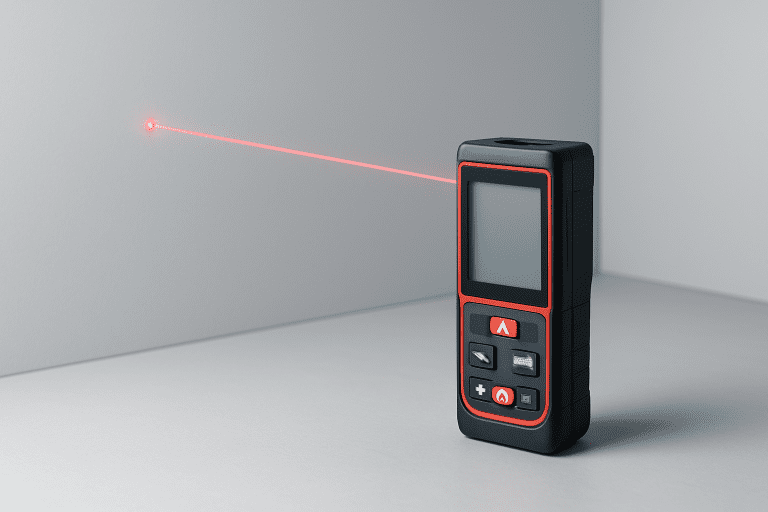
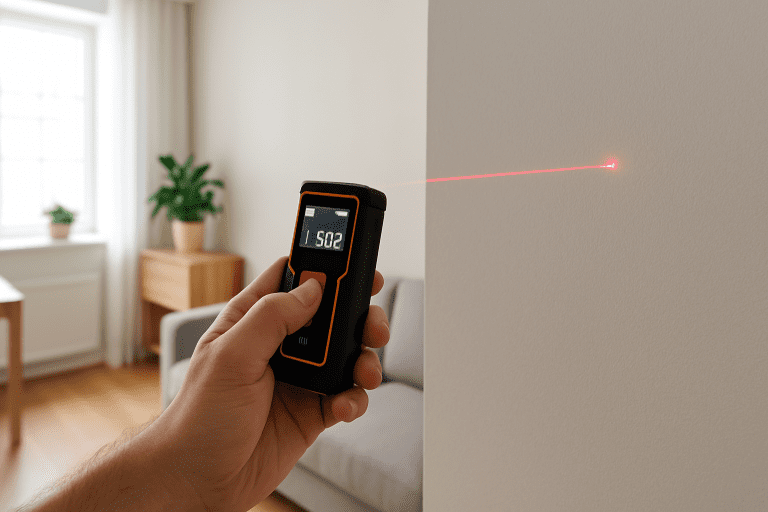
A laser measuring tool sends out a beam of light, bounces it off a surface, and calculates the distance based on how long that trip takes. No tape, no second person holding the other end.
It sounds high-tech, but the concept is simple. The accuracy comes from the sensor timing, not from anything you have to calculate yourself.
Getting Your First Reading Right
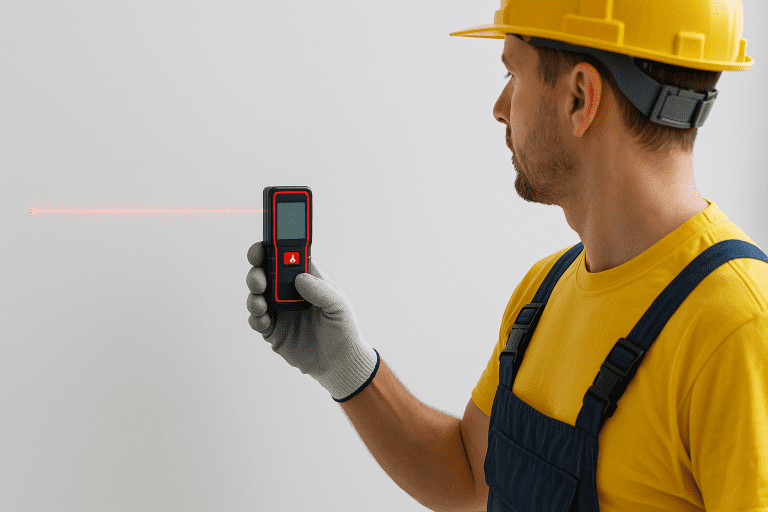
The first time I used mine, I pointed it at a wall from across the room and got a number that seemed way too short. Turns out I was aiming slightly off-angle, and the beam bounced off a picture frame instead of the wall behind it.
Keep the laser as level and straight as possible. Most models have a small screen showing a live number, so you can watch it settle before locking it in.
| Mistake | Better Approach |
|---|---|
| Aiming at an angle across a room | Stand directly facing the target surface |
| Measuring through glass or mirrors | Reposition to a solid, matte surface |
| Ignoring the reference point setting | Check whether it’s measuring from the back or front of the device |
Understanding the Reference Point
This one tripped me up for weeks. Every laser tool measures from a specific starting point on the device itself, either the back edge, the front edge, or an extendable foot you flip out for corners.
If you don’t know which reference point your tool defaults to, you’ll be consistently off by an inch or two, which matters a lot when you’re cutting shelving to fit.
Measuring Rooms, Not Just Straight Lines
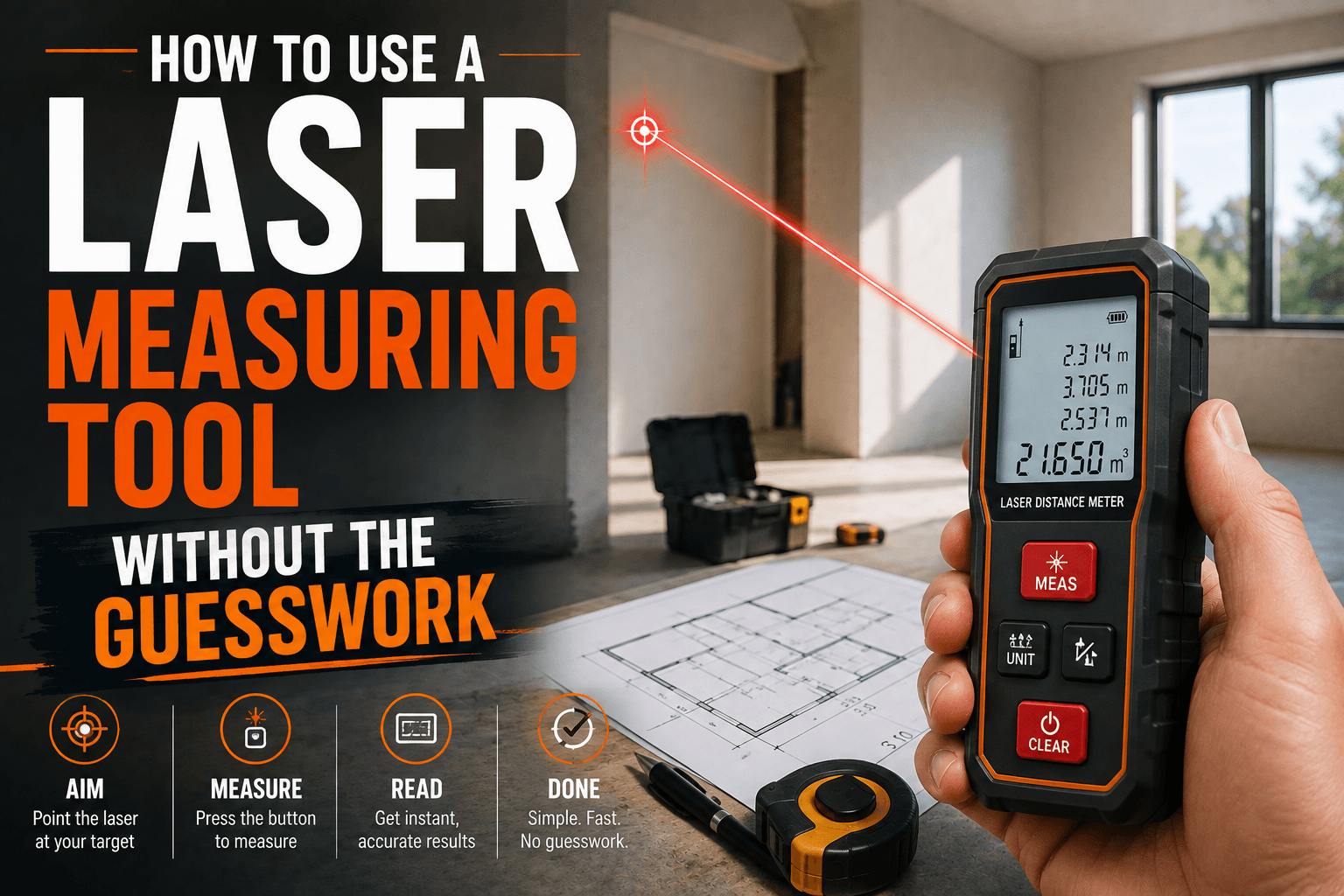
A tape measure forces you to think in straight lines because that’s all it can do. A laser tool lets you measure length, width, and height separately and then combine them, which is genuinely useful for flooring or paint estimates.
Some models have an area or volume mode built in, so you don’t need to do the multiplication yourself.
| Task | Mode to Use |
|---|---|
| Single wall length | Distance mode |
| Flooring or carpet estimate | Area mode |
| Paint or wallpaper for a full room | Volume or continuous mode |
Common Situations That Throw Off Accuracy
I learned this the hard way while measuring a garage that had a lot of natural light coming through the windows. Bright sunlight can wash out the laser dot, making it hard to confirm exactly where the beam landed, which matters more than people expect.
Dark or reflective surfaces cause a different problem. Black surfaces sometimes absorb the beam instead of reflecting it cleanly, giving you an error message or a wildly inaccurate number.
| Surface or Condition | What Tends to Happen |
|---|---|
| Bright direct sunlight | Dot becomes hard to see, reading may be less precise |
| Glass or mirrored surfaces | Beam passes through or bounces oddly |
| Very dark or matte black walls | Weak reflection, possible error reading |
| Textured or uneven surfaces | Slight variation between attempts |
Indoor vs Outdoor Use
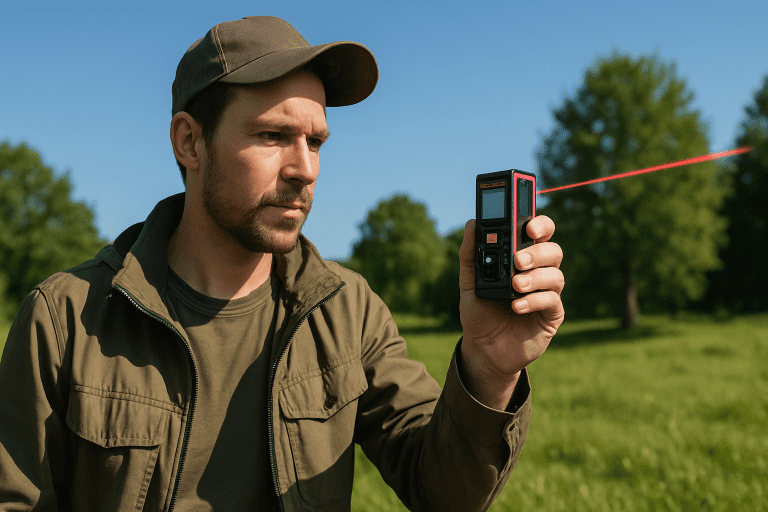
I assumed my laser tool would work the same outside as it did indoors, and mostly it does, but distance and light conditions change things. Manufacturers usually list a maximum outdoor range that’s noticeably shorter than the indoor range, because there’s no wall or ceiling bouncing light back to help.
If you’re measuring a fence line or a driveway, using it on an overcast day gives you a cleaner reading than trying it at noon.
Battery Habits I Wish I’d Known Sooner
These tools sip power slowly during standby, but the laser itself draws more than people expect, especially on models with a continuous measuring mode. Mine died mid-project once because I’d left it in a tool bag with the screen dimly lit for days.
Keeping a spare battery around, or charging it after every big job rather than waiting until it’s empty, has saved me from repeating that.
Myths About Laser Measuring Tools
A lot of people assume these tools are either flawless or basically useless, and neither is true.
| Myth | Reality |
|---|---|
| Laser tools are always more accurate than tape measures | They’re accurate under good conditions, but bad angles or surfaces can throw them off |
| You never need to double-check a reading | A second measurement takes seconds and catches user error |
| They don’t work outdoors at all | They work outdoors, just with a shorter effective range |
Getting the Most Accurate Results Every Time
Over time, a few habits made a real difference for me. Taking two readings instead of one, especially for anything I was cutting material for, caught small errors more than once. Cleaning the lens with a soft cloth before important jobs helped too, since dust and fingerprints scatter the beam more than you’d think.
I also started keeping the reference point setting the same across a project instead of switching between front and back edge measurements, which used to create tiny inconsistencies that added up across a whole room.
Final Thoughts
A laser measuring tool isn’t complicated once you understand the few things that actually affect accuracy: the reference point, the surface you’re aiming at, and the lighting conditions around you. Most of the frustration people run into comes from skipping those basics, not from the tool itself being unreliable.
My honest take after using one regularly is that it’s faster and more convenient than a tape measure for most jobs, but it still rewards a little patience. Check your reference point, avoid tricky surfaces when you can, and take a second reading when precision actually matters. That habit alone will save you from the kind of measuring mistakes that are annoying to fix after the fact.