I used to think checking home energy use meant looking at the electricity bill once a month. That gives you the total, but it does not tell you where the electricity went. An air conditioner, water heater, refrigerator, or old appliance can quietly use a lot more power than expected.
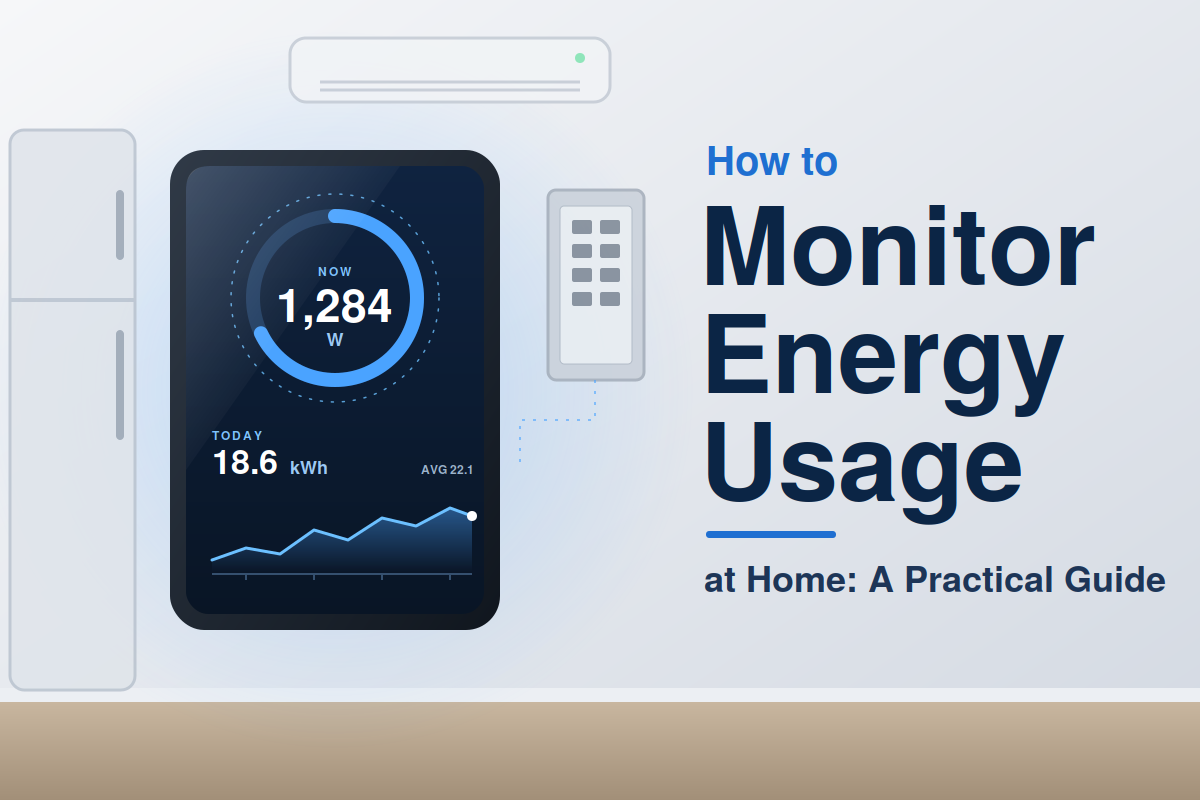
If you want to know how to monitor energy usage at home, the good news is that you do not need a complicated setup. You can start with your electricity meter and a few simple habits. If you want more detail, a plug-in energy monitor or whole-home energy monitor can show what is happening almost in real time.
How to monitor energy usage at home without buying anything
The easiest place to start is your electricity meter. It records the total energy your home uses, usually in kilowatt-hours (kWh). Your utility bill then uses that reading to calculate your energy cost.
I find it much more useful to record the meter reading at the same time each day rather than checking it randomly.
| What to record | Why it helps |
|---|---|
| Meter reading | Shows total energy used |
| Date and time | Makes readings comparable |
| Daily kWh difference | Shows your actual daily use |
For example, if yesterday’s meter reading was 4,820 kWh and today’s is 4,835 kWh, your home used 15 kWh during that period.
This simple method will not tell you which appliance caused the usage. But it gives you a baseline. That is important because you cannot reduce energy use effectively if you do not know your normal consumption.
Can I monitor energy usage from my electricity meter?
Yes, if your meter provides a suitable display or data connection. A basic digital meter may only show cumulative kWh, while a smart meter can provide much more information.
| Meter type | What you can usually see |
|---|---|
| Traditional meter | Total electricity consumption |
| Digital meter | Total kWh and meter information |
| Smart meter | More detailed usage data and readings |
Do not open or modify the meter yourself. It is utility equipment, and some meters require authorized access.
How to find which appliances use the most electricity
This is where home energy monitoring becomes much more useful.
Instead of asking, “Why was my electricity bill high?”, I prefer to ask, “Which devices are running for the longest time or drawing the most power?”
A plug-in energy monitor can help with individual appliances. You plug the monitor into an outlet and then connect the appliance to it.
| Appliance | What to watch |
|---|---|
| Air conditioner | Running time and power draw |
| Refrigerator | Cycling and daily energy use |
| Water heater | Heating time |
| Computer | Hours of operation |
| Space heater | Very high power demand |
One thing that can be surprising is that high wattage does not always mean the highest daily energy use.
A 1,500-watt heater used for one hour consumes about 1.5 kWh. A 100-watt device running for 12 hours consumes about 1.2 kWh.
That small calculation changed how I think about energy use. Runtime matters just as much as power.
How do I calculate electricity usage from watts?
Use this simple formula:
Energy used (kWh) = Watts × Hours used ÷ 1,000
For example:
1,000 watts × 3 hours ÷ 1,000 = 3 kWh
| Device | Power | 5-hour use |
|---|---|---|
| Fan | 60 W | 0.30 kWh |
| Laptop | 70 W | 0.35 kWh |
| Heater | 1,500 W | 7.50 kWh |
The real result can vary because many appliances do not draw their rated power constantly.
Use an energy monitor for appliances you suspect
A plug-in electricity usage monitor is one of the simplest tools for finding hidden energy use.
It can show power in watts and, depending on the model, accumulated energy in kWh. Some also estimate the cost when you enter your electricity rate.
I would not put one on every appliance. That quickly becomes confusing. Start with devices that run often or seem expensive.
| Start with | Why |
|---|---|
| Refrigerator | Runs day and night |
| AC unit | Can have large energy demand |
| Water heater | Often uses high power |
| Entertainment setup | May have standby loads |
There is another useful trick here: measure the appliance during normal use rather than for only a few minutes. A refrigerator, for example, switches its compressor on and off. A short test may give you a misleading result.
A whole-home energy monitor gives a bigger picture
If you want to monitor energy usage at home continuously, a whole-home energy monitor can be more useful than several plug-in meters.
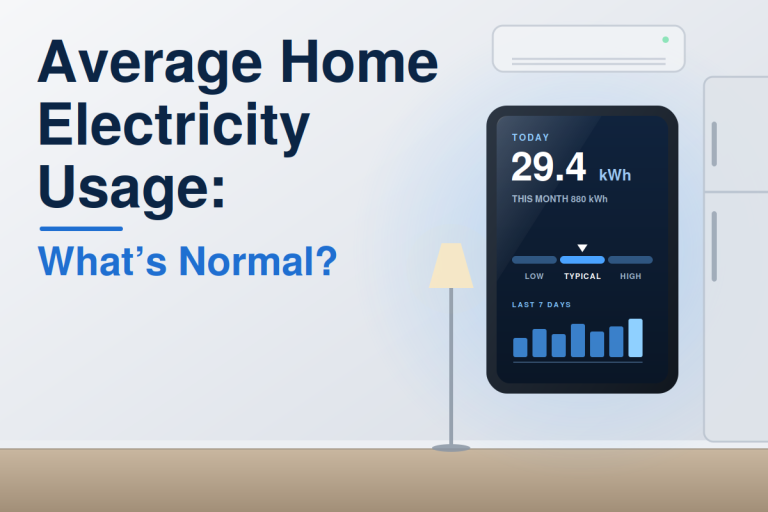
These systems are installed around the home’s electrical system and can track overall electricity consumption. Some connect to an app and show current power demand, daily usage, and historical patterns.
| Monitoring method | Best for |
|---|---|
| Electricity meter | Basic total usage |
| Plug-in monitor | One appliance |
| Whole-home monitor | Overall household patterns |
Installation can involve the electrical panel, so I would not treat it as a casual DIY project unless the equipment and local electrical rules clearly allow it.
The real benefit is seeing patterns. You may notice that your home’s electricity demand jumps every evening or stays unusually high while everyone is asleep.
How to spot unusual energy use
A sudden increase in electricity consumption does not always mean you bought a new appliance. Sometimes the change comes from longer operating hours, weather, or equipment problems.
| Sign | Possible reason |
|---|---|
| Higher daytime use | AC or other equipment running longer |
| Higher overnight use | Appliance or standby load |
| Sudden unexplained increase | Fault, changed routine, or new device |
I would compare several days before making a decision. One unusual day is not enough evidence.
For example, hot weather can make an air conditioner run much longer. If you compare that day with a mild-weather day, the difference becomes easier to understand.
What should I do if energy use suddenly increases?
First, check whether your daily routine changed. Then look at major loads such as cooling, heating, water heating, cooking, and laundry.
If nothing has changed, monitor the usage for a few more days. A persistent unexplained increase is more useful evidence than a single high reading.
If you suspect an electrical fault or unsafe equipment, have a qualified electrician inspect it rather than experimenting with the wiring yourself.
Common mistakes when monitoring home energy
The biggest mistake is trying to measure everything at once. I would start small.
Another common problem is confusing power with energy. Watts describe the rate of electricity use. Kilowatt-hours describe the energy consumed over time.
| Mistake | Better approach |
|---|---|
| Checking one random reading | Track readings regularly |
| Looking only at watts | Track kWh and runtime |
| Measuring everything at once | Start with major loads |
| Assuming high wattage means high cost | Consider operating time |
I also would not rely on the estimated cost shown by an app without checking your actual electricity rate. Electricity pricing can include different rates, fees, taxes, or billing structures.
Turn energy monitoring into a useful daily habit
Once you have a baseline, the goal is not to stare at the energy monitor every hour. That gets boring very quickly.
Instead, use the information to find patterns and test small changes.
For example, you can compare energy use before and after changing an AC temperature setting, reducing unnecessary operating time, or turning off equipment that stays on all night.
| Test | What to compare |
|---|---|
| Before vs. after | Daily kWh |
| Weekday vs. weekend | Usage patterns |
| Hot vs. mild day | Cooling demand |
This turns energy monitoring into a simple experiment. Change one thing, watch the result, and decide whether the change was worthwhile.
How often should you monitor home energy usage?
You do not need to check it constantly. Daily readings are useful when you are establishing a baseline or investigating a sudden increase.
After that, weekly checks may be enough for many households.
The important part is consistency. A month of simple, reliable data can tell you much more than several random readings.
Final Thoughts
Learning how to monitor energy usage at home does not have to start with expensive equipment. Your electricity meter, a notebook or spreadsheet, and a little consistency can reveal a surprising amount.
Once you know your normal usage, use an appliance energy monitor to investigate the biggest suspects. If you need a complete picture, consider a whole-home energy monitoring system installed safely. The main lesson is simple: measure first, look for patterns, and then make changes based on what the numbers actually show.