When I look at average home electricity usage, I find that the number alone can be a little misleading. Two homes can use very different amounts of electricity and still be perfectly normal. A small apartment without electric heating is nothing like a large house with central air, an electric water heater, and several people at home all day.
For a useful comparison, I look at monthly kWh, the size of the home, the number of people, climate, and the appliances doing the heavy work. In this guide, I’ll break down the numbers, what drives them, and how to tell whether your own electricity usage is actually high.
What Is the Average Home Electricity Usage?
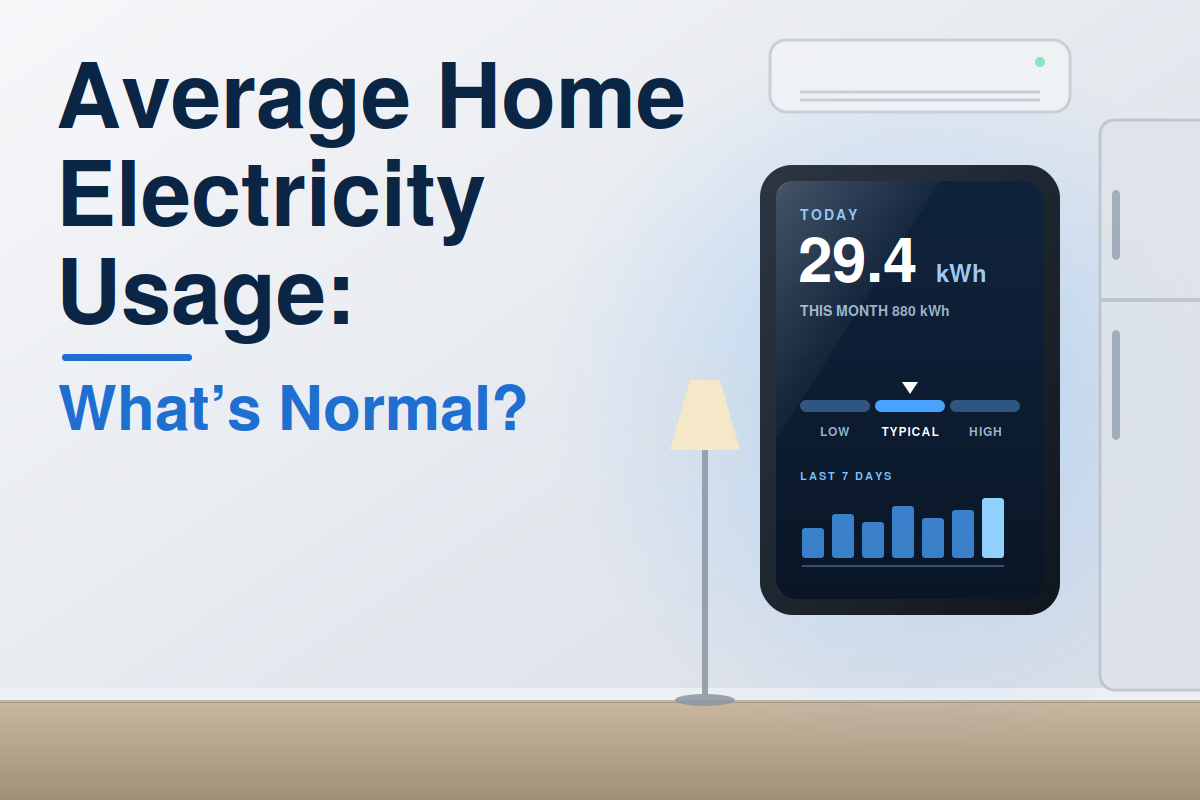
For U.S. homes, a good recent benchmark is about 865 kWh per month, based on 2024 electricity sales per residential customer. That works out to roughly 10,380 kWh per year. The 2024 figure was slightly higher than the 861 kWh monthly average recorded in 2023.
I would treat this as a reference point, not a target. Your home may naturally sit well below or above it.
| Measure | Approximate U.S. average |
|---|---|
| Monthly electricity usage | 865 kWh |
| Annual electricity usage | 10,380 kWh |
| Daily average | 28.4 kWh |
The daily number is especially useful when checking smart-meter data. If a home uses around 28 kWh every day on average, it is close to the national monthly benchmark.
Why the Average Can Be Misleading
The biggest mistake I see with electricity comparisons is assuming that every home should use roughly the same amount.
That simply does not work.
Heating and cooling can change electricity usage dramatically. So can home size, insulation, household size, electric appliances, and even whether someone works from home.
| Home situation | Likely usage pattern |
|---|---|
| Small apartment | Often below national average |
| Average family home | Around the average or higher |
| Large home with electric HVAC | Often well above average |
There is another detail worth knowing: electricity purchases from the grid are not always the same as total household electricity consumption. Solar panels can reduce the amount a home buys from the grid, even when the home itself uses much more electricity.
Average Home Electricity Usage by Month
Monthly usage is rarely flat. This became obvious to me when looking at how strongly seasonal demand affects electricity consumption.
Summer is often the expensive month in homes that rely heavily on air conditioning. In the U.S., average residential electricity consumption during June, July, and August was about 1,087 kWh per month in summer 2024, compared with the annual monthly average of 865 kWh.
| Season | Common reason for higher usage |
|---|---|
| Winter | Electric heating, heat pumps |
| Spring | Lower heating and cooling demand |
| Summer | Air conditioning and fans |
| Fall | Usually moderate usage |
This is why I would not judge a home’s electricity efficiency from one unusually high bill.
A better method is to compare several months.
How Much Electricity Does a Home Use Per Day?
Using the 865 kWh monthly U.S. average, a home uses about 28.4 kWh per day.
That does not mean your meter should show exactly 28 kWh every day. Daily usage can swing quite a bit.
For example, a hot day with heavy air-conditioning use can consume much more electricity than a mild day when the HVAC system barely runs.
| Daily usage | What it may suggest |
|---|---|
| Under 15 kWh | Relatively low usage |
| 15–35 kWh | Moderate range |
| Over 35 kWh | Higher usage, depending on the home |
These are practical comparison ranges, not official limits. The equipment in the home matters much more than the number by itself.
What Uses the Most Electricity at Home?
When I want to understand a high electricity bill, I do not start by blaming lights or phone chargers. The bigger loads deserve attention first.
Heating and cooling, water heating, refrigerators, electric cooking, clothes dryers, and other large appliances can make a much bigger difference.
| Electricity user | Why it matters |
|---|---|
| Air conditioner | Runs for long periods in hot weather |
| Electric heating | Can create very large seasonal loads |
| Water heater | Heats water repeatedly throughout the day |
| Clothes dryer | Uses substantial power during each cycle |
| Refrigerator | Runs continuously, although at varying power |
This is also why replacing a few small bulbs may not dramatically change a home’s electricity usage if the air conditioner is running for hours every day.
Appliance Wattage Is Only Half the Story
One thing that is easy to misunderstand is the difference between power and energy.
A device rated at 1,000 watts does not necessarily use 1,000 kWh. It would need to run for 1,000 hours to consume 1,000 kWh.
The basic calculation is:
Energy used (kWh) = Power (kW) × Time (hours)
So a 1,500-watt appliance running for two hours uses about:
1.5 × 2 = 3 kWh
That simple calculation is surprisingly useful when trying to explain a sudden increase in electricity consumption.
Average Home Electricity Usage by Home Size
Home size can influence electricity consumption, but it does not tell the whole story.
A large, efficient home may use less electricity than a smaller poorly insulated home with heavy air-conditioning.
| Home characteristic | Effect on electricity usage |
|---|---|
| Larger floor area | More space to heat, cool, and light |
| Poor insulation | HVAC works harder |
| Efficient appliances | Can reduce electricity demand |
| Electric heating | Can greatly increase winter usage |
I would therefore avoid using square footage as the only benchmark.
If two homes have similar floor areas but one has gas heating and the other uses electric resistance heating, their electricity bills can look completely different.
How Many People Live in the Home?
Household size also matters, although not always in the way people expect.
More people usually means more showers, laundry, cooking, electronics, refrigeration demand, and time spent using the home. But the increase is not perfectly proportional.
For example, four people do not necessarily use exactly twice as much electricity as two people.
| Household pattern | Main electricity effect |
|---|---|
| One person | Usually fewer daily loads |
| Two to three people | Moderate household demand |
| Four or more people | More hot water, cooking, laundry and electronics |
This is one reason I prefer comparing similar households rather than simply asking whether a home’s usage is above the national average.
Why Your Electricity Usage May Suddenly Increase
A sudden increase is more useful to investigate than a small difference from the national average.
If your usage jumps from 700 kWh to 1,200 kWh, I would look for a change in behavior or equipment before assuming something is wrong with the meter.
| Change | What to check |
|---|---|
| Higher summer bill | Air conditioner runtime |
| Higher winter bill | Electric heating or heat pump |
| Gradual increase | Aging appliance or changing habits |
| Sudden unexplained spike | New equipment, HVAC issue, or meter data |
Sometimes the explanation is surprisingly simple. A new freezer, portable heater, dehumidifier, or second refrigerator can quietly add a meaningful load.
How I Would Check My Own Home Electricity Usage
The most useful number is not the national average. It is your home’s own trend.
I would start with 12 months of electricity bills if available. Write down the kWh used each month rather than focusing only on the dollar amount.
Then look for the highest and lowest months.
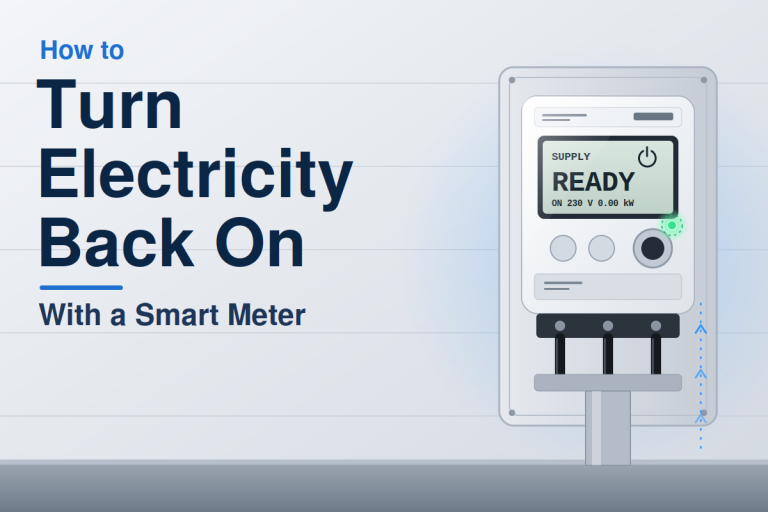
A smart meter can make this much easier because many utilities provide daily or hourly electricity usage data. An energy monitor can also help identify which circuits or appliances are responsible for unusually high demand.
| Tracking method | Best use |
|---|---|
| Utility bill | Long-term monthly comparison |
| Smart meter data | Daily or hourly patterns |
| Home energy monitor | Finding major electrical loads |
One lesson I find important here is that electricity cost and electricity usage are not the same thing. Your bill depends on both how many kWh you use and what your utility charges per kWh. EIA reported an average U.S. residential electricity price of 16.48 cents/kWh in 2024.
So a higher bill does not automatically mean your home suddenly became less efficient.
Is My Home Electricity Usage Too High?
There is no single kWh number that proves a home is using too much electricity.
A household using 1,200 kWh in a hot summer month may have a completely reasonable explanation. The same usage in a small apartment with no electric heating or cooling deserves a closer look.
| Situation | My approach |
|---|---|
| Slightly above average | Check seasonal and home-size differences |
| Much higher than similar homes | Investigate major loads |
| Sudden unexplained increase | Compare recent usage patterns |
| Consistently high usage | Audit heating, cooling and appliances |
The best comparison is with your own previous usage and similar homes, not with a national average alone.
A Simple Way to Lower Home Electricity Usage
I would start with the large loads instead of trying to save electricity everywhere at once.
Check the thermostat settings, HVAC runtime, water-heater settings, dryer use, and older appliances first. These areas usually deserve more attention than small standby loads.
Also, do not make the common mistake of changing several things at once. If you track your electricity usage for a few weeks, make one practical change, and then check the results, it becomes much easier to see what actually helped.
Final Thoughts on Average Home Electricity Usage
The biggest lesson is that average home electricity usage is only a benchmark. In the U.S., roughly 865 kWh per month was the 2024 average for residential electricity customers, but real homes can sit far above or below that number for perfectly valid reasons.
If your usage looks high, do not panic over one bill. Check the trend, look at seasonal changes, identify your biggest electrical loads, and compare your home with similar homes. That approach tells you much more than simply asking whether your monthly kWh is above the national average.